
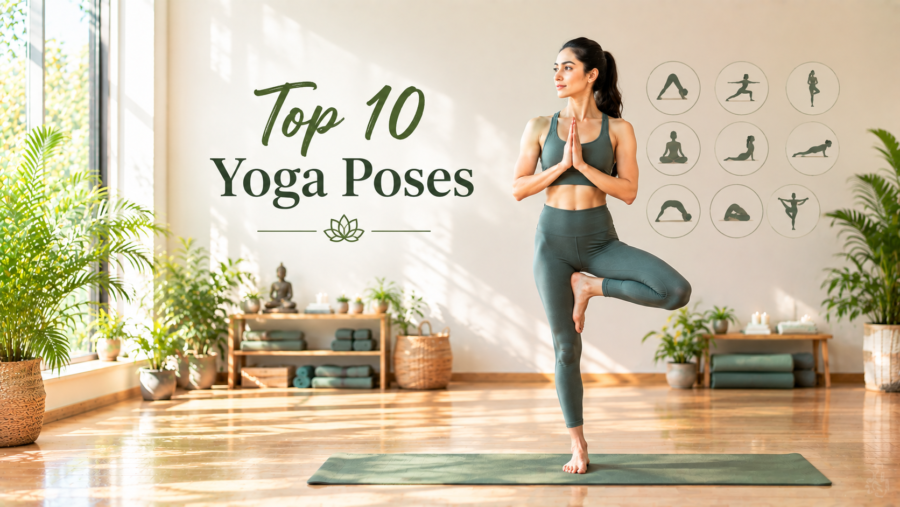
Discover the Top 10 Yoga Poses that can help you improve flexibility, build strength, reduce stress, and restore inner balance. Whether you’re a complete beginner or looking to refresh your daily routine, these essential yoga poses provide the perfect foundation for a healthier body and a calmer mind.
Roll out your yoga mat and begin your journey toward better health—one pose at a time.
Introduction:
Yoga is one of the most effective ways to improve your physical and mental health naturally. Whether you’re looking to reduce stress, increase flexibility, build strength, or improve posture, practicing the top 10 yoga poses can help you achieve your fitness goals.
The beauty of yoga is that anyone can practice it regardless of age or fitness level. Even spending 15–20 minutes each day performing basic yoga poses can make a noticeable difference in your overall well-being.
In this comprehensive guide, we’ll explore the top 10 yoga poses, their health benefits, step-by-step instructions, common mistakes, and helpful tips for beginners.
Top 10 Yoga Poses for Better Health and Wellness
Yoga is one of the most effective ways to improve your physical and mental health naturally. Whether you’re looking to reduce stress, increase flexibility, build strength, or improve posture, practicing the top 10 yoga poses can help you achieve your fitness goals.
The beauty of yoga is that anyone can practice it regardless of age or fitness level. Even spending 15–20 minutes each day performing basic yoga poses can make a noticeable difference in your overall well-being.
In this comprehensive guide, we’ll explore the top 10 yoga poses, their health benefits, step-by-step instructions, common mistakes, and helpful tips for beginners.
Why Practice Yoga?
Yoga is much more than stretching. It combines physical movement, breathing exercises, and mindfulness to create balance between the body and mind.
Benefits of Yoga
- Improves flexibility
- Builds muscle strength
- Enhances posture
- Reduces stress and anxiety
- Improves sleep quality
- Supports heart health
- Increases balance and coordination
- Boosts energy levels
- Helps manage weight
- Improves concentration
According to health experts, regular yoga practice can also reduce chronic pain and improve overall quality of life.
Top 10 Yoga Poses
1. Mountain Pose (Tadasana)
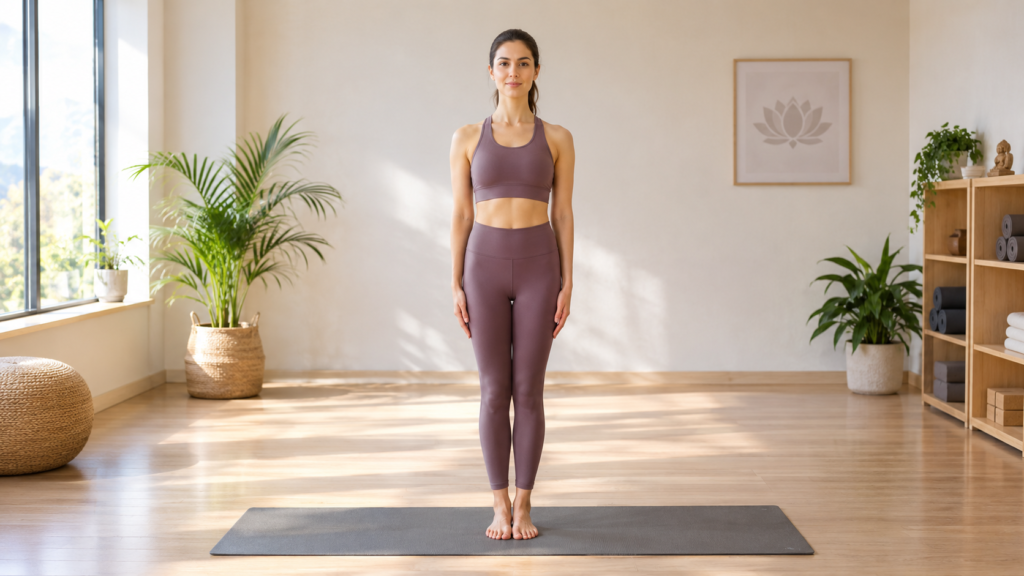
Mountain Pose is the foundation of nearly every standing yoga posture.
How to Do It
- Stand tall with your feet together.
- Keep your arms by your sides.
- Engage your thighs and core.
- Relax your shoulders.
- Breathe deeply for 30–60 seconds.
Benefits
- Improves posture
- Strengthens legs
- Enhances balance
- Increases body awareness
2. Downward-Facing Dog (Adho Mukha Svanasana)
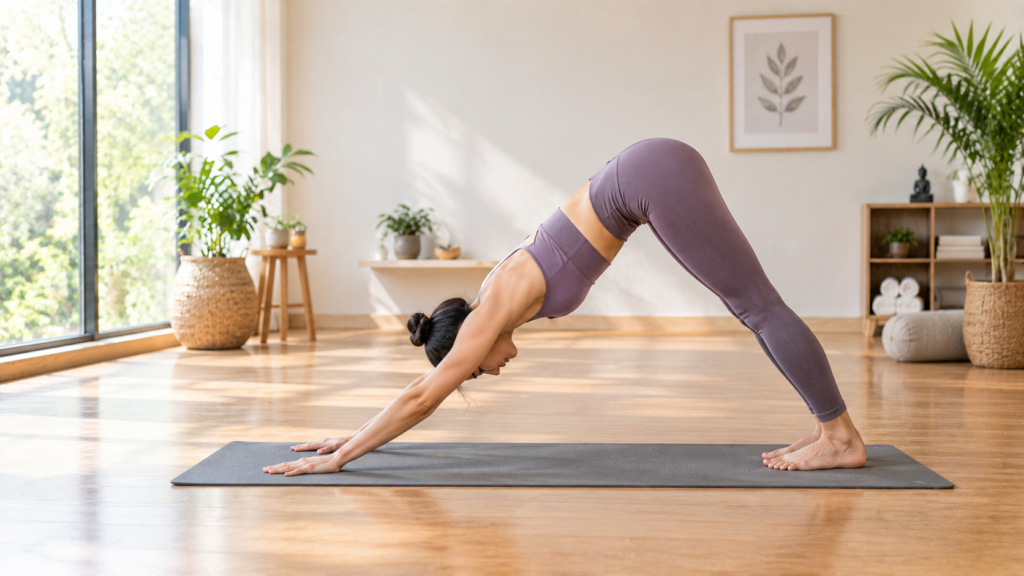
One of the most recognized yoga poses, Downward Dog stretches nearly the entire body.
Steps
- Begin on hands and knees.
- Lift your hips toward the ceiling.
- Straighten your legs as much as comfortable.
- Press your palms firmly into the floor.
- Keep your neck relaxed.
Benefits
- Stretches hamstrings
- Strengthens arms
- Relieves back tension
- Improves circulation
3. Child’s Pose (Balasana)
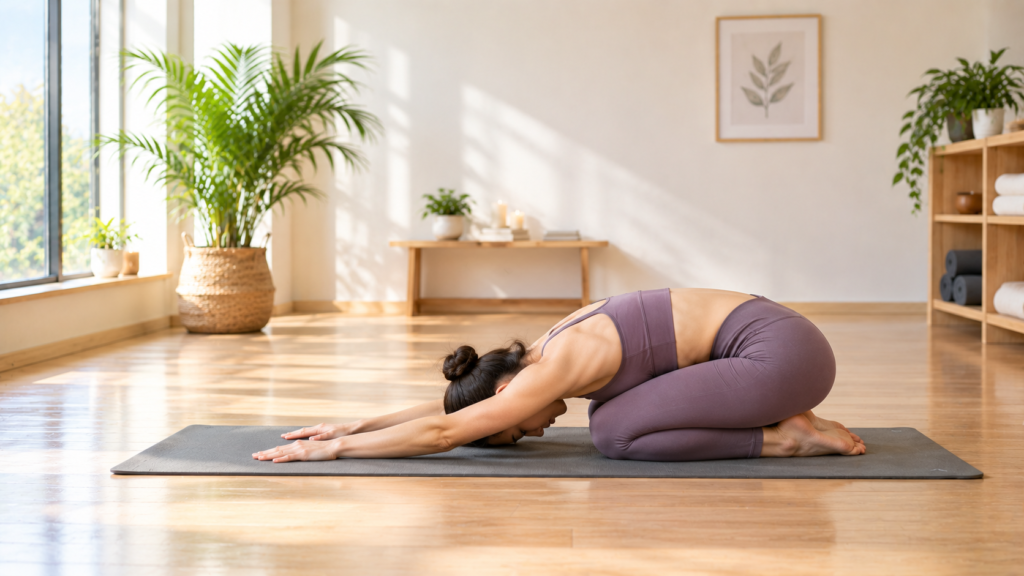
Child’s Pose is a relaxing position often used between more challenging poses.
How to Practice
- Sit on your heels.
- Fold forward.
- Stretch your arms in front.
- Rest your forehead on the mat.
- Breathe slowly.
Benefits
- Relieves stress
- Stretches hips
- Reduces back pain
- Promotes relaxation
4. Cobra Pose (Bhujangasana)
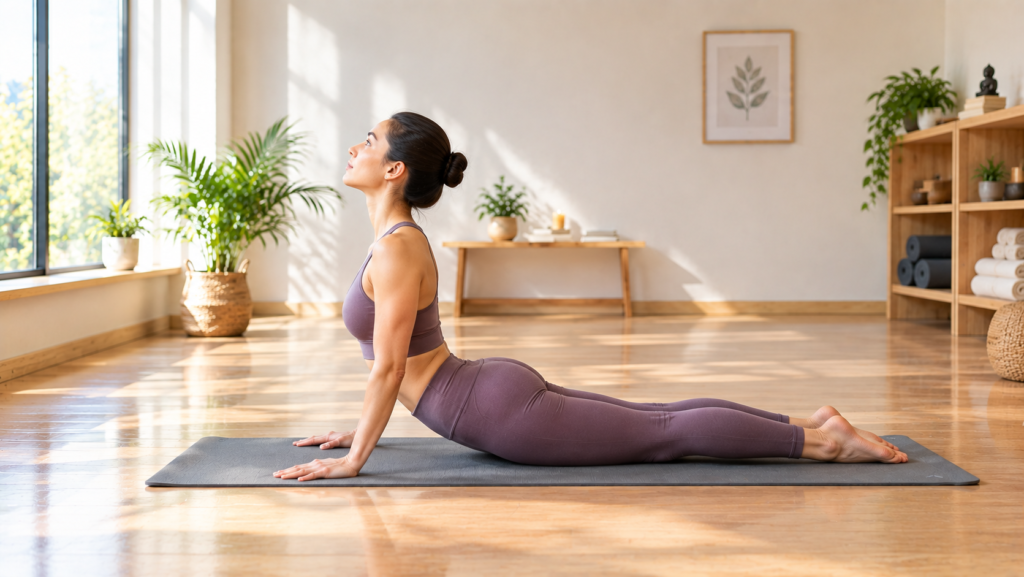
Cobra Pose strengthens the spine while opening the chest.
Instructions
- Lie face down.
- Place hands beneath shoulders.
- Lift your chest.
- Keep elbows slightly bent.
- Look forward.
Benefits
- Improves posture
- Strengthens the spine
- Opens the lungs
- Reduces stiffness
5. Warrior I (Virabhadrasana I)
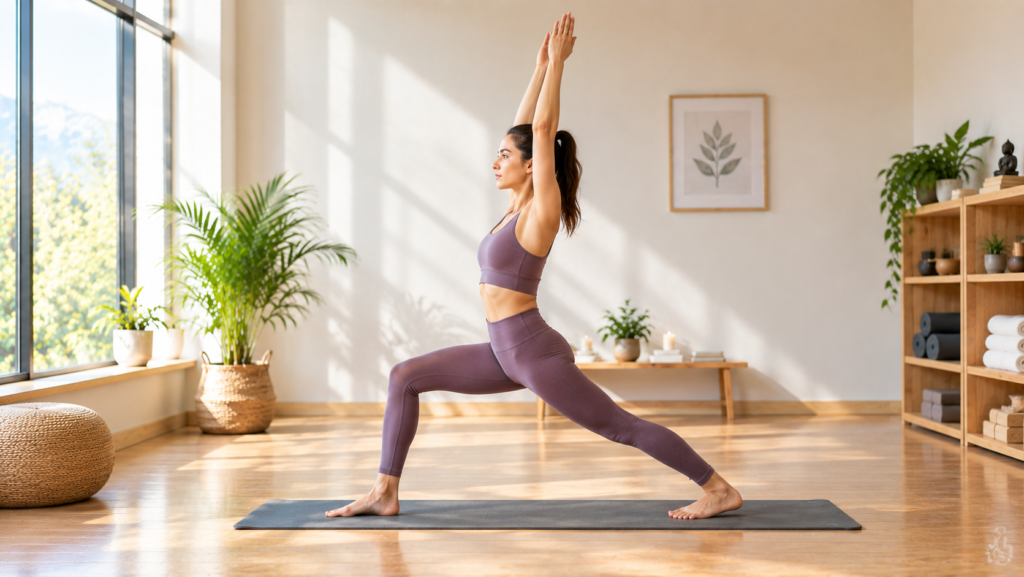
Warrior I develops lower-body strength and confidence.
Steps
- Step one foot back.
- Bend the front knee.
- Raise your arms overhead.
- Square your hips forward.
- Hold for several breaths.
Benefits
- Builds leg strength
- Improves stability
- Opens hips
- Increases stamina
6. Warrior II (Virabhadrasana II)
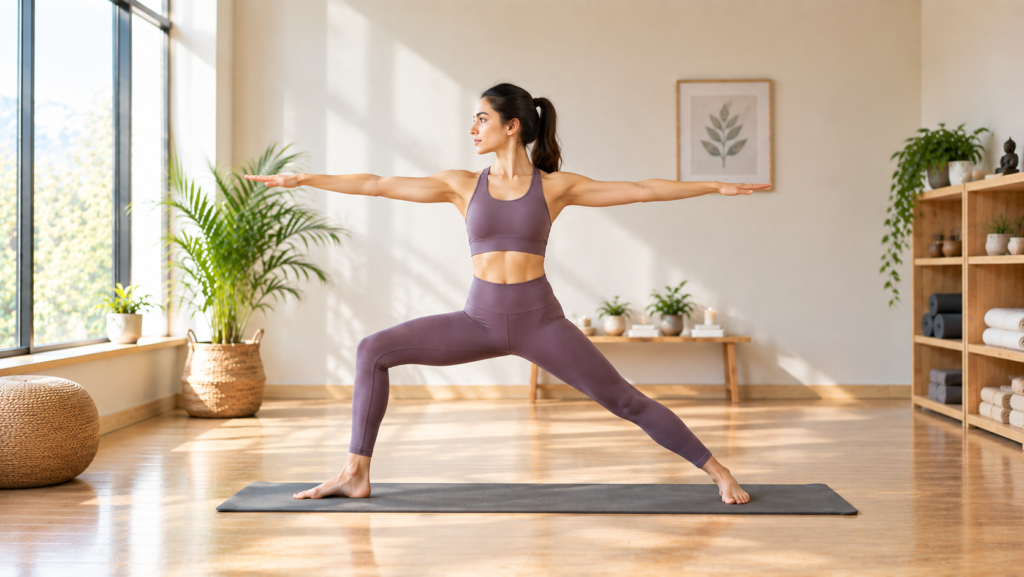
Warrior II improves endurance and body alignment.
How to Perform
- Stand with feet wide apart.
- Bend the front knee.
- Extend both arms.
- Look over your front hand.
- Hold the pose.
Benefits
- Strengthens legs
- Improves focus
- Enhances balance
- Builds endurance
7. Tree Pose (Vrikshasana)
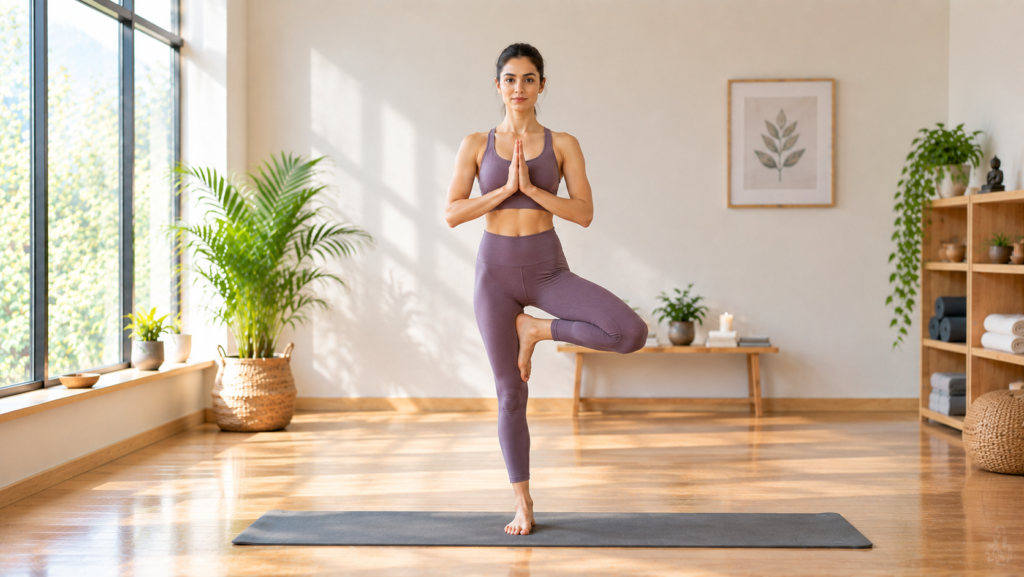
Tree Pose is excellent for improving balance.
Steps
- Stand on one foot.
- Place the other foot on the inner thigh or calf (avoid the knee).
- Bring hands together at your chest or overhead.
- Focus on one point.
- Hold and switch sides.
Benefits
- Improves balance
- Strengthens ankles
- Increases concentration
- Enhances posture
8. Bridge Pose (Setu Bandhasana)
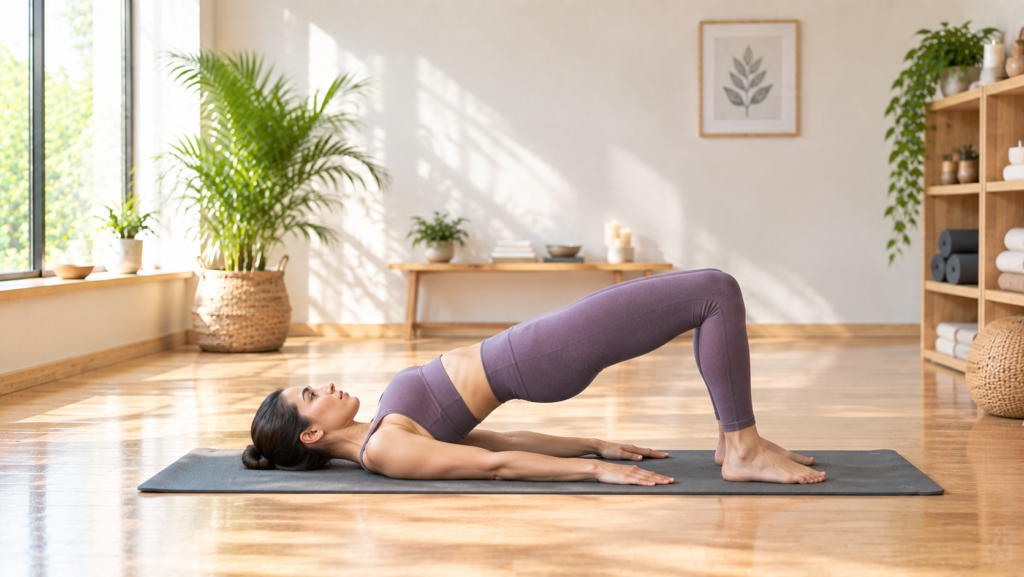
Bridge Pose strengthens the back and glutes.
Instructions
- Lie on your back.
- Bend your knees.
- Lift your hips.
- Press feet firmly into the floor.
- Hold for 30 seconds.
Benefits
- Strengthens back muscles
- Opens the chest
- Improves spinal flexibility
- Supports core strength
9. Seated Forward Bend (Paschimottanasana)
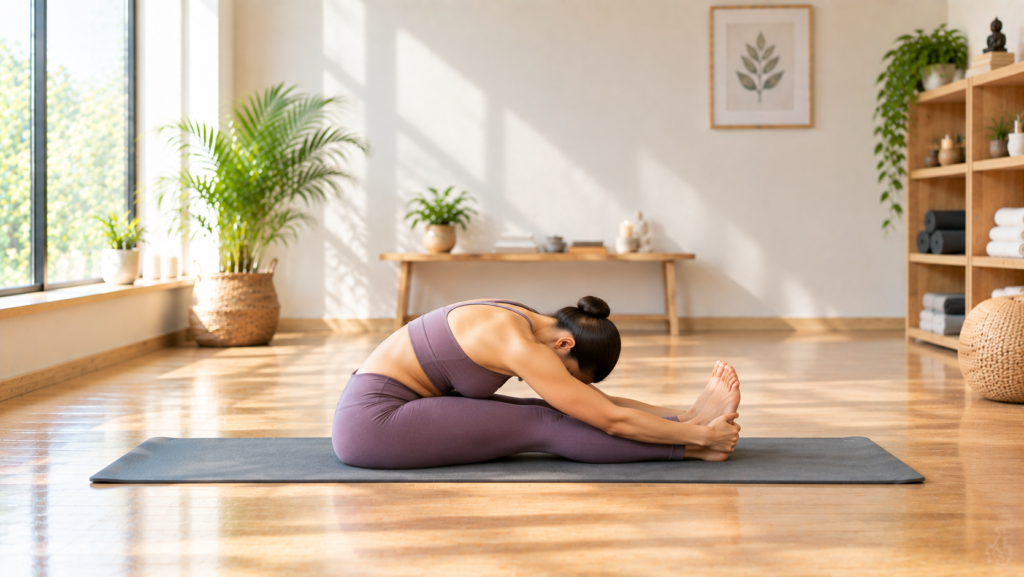
This pose deeply stretches the back body.
How to Do It
- Sit with legs extended.
- Reach toward your feet.
- Keep your back long.
- Relax your neck.
- Breathe deeply.
Benefits
- Improves flexibility
- Relieves stress
- Supports digestion
- Calms the mind
10. Corpse Pose (Savasana)
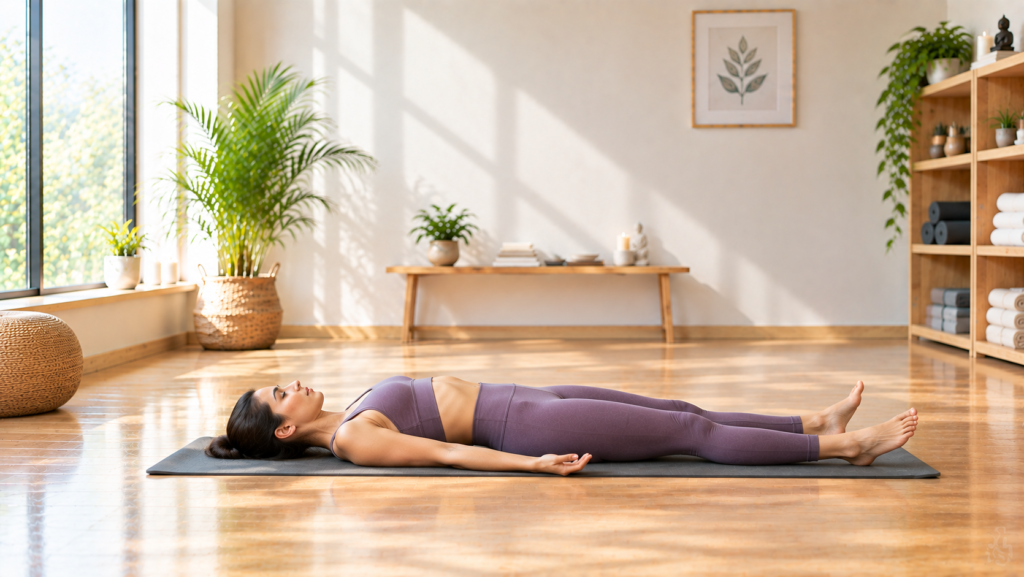
Every yoga session should end with Savasana.
Steps
- Lie flat on your back.
- Relax your arms and legs.
- Close your eyes.
- Focus on your breathing.
- Stay for 5–10 minutes.
Benefits
- Reduces stress
- Lowers heart rate
- Promotes deep relaxation
- Enhances recovery
Tips for Beginners
If you’re new to yoga, keep these tips in mind:
- Start with basic poses.
- Practice on a yoga mat.
- Wear comfortable clothing.
- Never force a stretch.
- Focus on breathing.
- Stay hydrated.
- Practice consistently.
- Listen to your body.
- Warm up before starting.
- End with relaxation.
Common Mistakes to Avoid
Many beginners make simple mistakes that can lead to discomfort or injury.
Avoid:
- Holding your breath
- Overstretching muscles
- Rushing through poses
- Ignoring proper alignment
- Skipping warm-up
- Comparing yourself with others
- Practicing through pain
Remember that yoga is about progress, not perfection.
How Often Should You Practice Yoga?
For beginners:
- 2–3 days per week is a great starting point.
For better flexibility:
- 4–5 sessions weekly
For overall wellness:
- 20–30 minutes daily
Consistency matters more than long workout sessions.
Who Should Be Careful?
Although yoga is generally safe, consult a healthcare professional before starting if you have:
- Severe back pain
- Recent surgery
- Heart disease
- High-risk pregnancy
- Serious joint injuries
- Uncontrolled high blood pressure
Modify poses as needed and consider guidance from a qualified yoga instructor.
Frequently Asked Questions (FAQs)
Which yoga pose is best for beginners?
Mountain Pose, Child’s Pose, and Downward-Facing Dog are among the easiest and safest poses for beginners.
Can yoga help with weight loss?
Yes. Regular yoga, combined with a balanced diet, can support weight management by increasing physical activity, reducing stress, and improving mindfulness.
How long should I hold each yoga pose?
Most beginner poses can be held for 20–60 seconds, depending on comfort and experience.
Is it okay to practice yoga every day?
Yes. Daily yoga is generally safe if you practice proper technique, vary the intensity, and allow your body to recover when needed.
What is the best time to practice yoga?
Many people prefer practicing in the morning to boost energy, while others enjoy evening sessions to relax. The best time is the one you can maintain consistently.
Conclusion
Learning the top 10 yoga poses is an excellent way to improve your physical fitness, flexibility, strength, and mental well-being. From the grounding Mountain Pose to the deeply relaxing Corpse Pose, each posture offers unique benefits that contribute to a healthier lifestyle.
The key to success with yoga is consistency, proper breathing, and listening to your body. Start slowly, focus on correct alignment, and enjoy the journey toward better health. Whether your goal is stress relief, improved posture, or greater flexibility, these foundational yoga poses provide a strong starting point for a lifelong wellness practice.